Dedicated electric flour mills
The home milling resource
A home grain mill—sometimes called a flour mill or wheat grinder—turns suitable dry whole grains into flour or meal. Choose by the ingredients you use, your normal batch, the collection workflow and every part needed to operate it.
Clear tradeoffs. Exact-model guidance. No invented testing.
Whole wheat, rice, corn or oats: the exact form matters.
Impact, stone, hand-crank and mixer-powered setups work differently.
Count the grain, storage, collection parts, setup and cost of each bake.
Explore the buying options
Check the actual model, included parts and current price before choosing. These are distinct products, with different setup requirements.
As an Amazon Associate, we earn from qualifying purchases.
Dedicated electric flour mills

Mixer attachments
Attachment only. Check compatibility with your mixer.
Check current price ↗Read the model guide →
Dedicated electric flour mills
Exact Harvest title; the finish is listing-specific. Confirm the electrical version and included parts.
Check current price ↗Read the model guide →Choose the milling workflow
The mechanism is only one part of the choice. Compare how flour is collected, what powers the mill, which parts complete the setup and which ingredients the exact manual permits.
Useful for repeated dry-flour batches when a hopper, filter and separate canister or bowl fit your routine. Confirm the approved grain list and stated batch limit.
Compare impact and stone mills ↗02 / ELECTRIC STONEUseful when open-bowl collection and fine-to-coarse adjustment matter. Plan outlet clearance, keep stones dry and verify the regional electrical version.
Compare stone and impact mills ↗03 / MANUALChoose the correct grinding heads, auger and bundle, then account for a stable mounting point and the hand effort of your normal batch.
Explore manual mills ↗04 / MIXER ATTACHMENTThe KitchenAid KGM is not a standalone mill. Include the compatible mixer, collection bowl, session limit and cooling time in the complete setup.
Explore the KGM attachment ↗Still deciding? Use the grain mill finder to build a documented shortlist.
Already have a model in mind? Check the exact ingredient in the compatibility checker.
From a shortlist to a routine
Check the documented permissions, calculate with your own prices, and record the batch you actually milled.
Explore the toolsDocumented model choices
These are starting points for different workflows, not a performance ranking. Read the model guidance and confirm the exact offer before buying.
As an Amazon Associate, we earn from qualifying purchases.
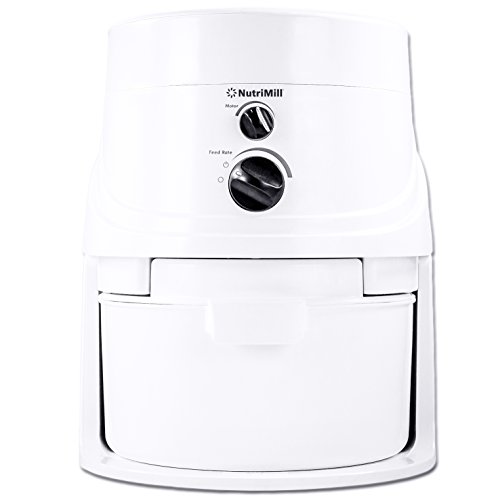
An enclosed-bowl impact mill for people who plan to prepare several recipe batches of flour.
a larger flour bowl matters more to your routine than collecting flour directly into a separate mixing bowl.
Before choosing: Dry, approved non-oily ingredients only. The manufacturer gives conflicting overall dimensions; confirm clearance before planning a tight storage space.
As an Amazon Associate, we earn from qualifying purchases.
NutriMill Classic. Confirm the current seller, electrical version and package contents.
Check current priceA stone mill that sends flour through a chute into your own collection bowl.
you want a stone mechanism and an open-bowl workflow for flour and documented coarser textures.
Before choosing: Keep stones dry. Dimensions conflict even within the current product page, so countertop fit remains unconfirmed until the seller or manufacturer resolves it.
As an Amazon Associate, we earn from qualifying purchases.
NutriMill Harvest, silver finish. Confirm the current seller, regional electrical version and included parts.
Check current priceA grain-mill attachment powered by a compatible household KitchenAid stand mixer, sold separately.
you already own the compatible mixer and its documented milling limits fit your small-batch routine.
Before choosing: An attachment is not a standalone powered mill. Current KitchenAid Product Help limits a session to 10 cups of flour followed by at least 45 minutes of mixer cooling; check your supplied instructions.
As an Amazon Associate, we earn from qualifying purchases.
KitchenAid KGM attachment. A compatible KitchenAid stand mixer is required and sold separately.
Check current priceThe comparisons that matter
Compare Classic and Impact grain mills by flour collection, capacity evidence and complete setup. See the unresolved Impact capacity and dimension conflicts.
Read the guide ComparisonsCompare WonderMill Electric and NutriMill Classic by loading sequence, flour-canister capacity, ingredient limits and complete kitchen setup.
Read the guide ComparisonsCompare standard Mockmill 100 and 200 throughput, listed motor power, setup and regional identity. Keep 220/230V references separate from US offers.
Read the guideYour first bag of grain
Plan a first grain-milling batch with exact-model startup instructions, suitable dry grain, correct collection setup and a useful flour record.
Read the guide Milling guidesChoose food-grade wheat berries by class and recipe. Compare hard red, hard white, soft wheat and durum, then confirm exact grain-mill compatibility.
Read the guide Milling guidesStore freshly milled flour and wheat berries with separate container, temperature, labeling and raw-flour safety decisions. Avoid a false universal expiry date.
Read the guideA source is a starting point
Manufacturer specifications sometimes disagree. Model generations and regional electrical versions can differ. We keep those distinctions visible and link to the documentation behind the guidance.
We have not hands-on tested these mills. Our contribution is practical comparison, complete-system thinking and a clear next question.
How our research works →It can be worthwhile when you use the flour regularly and value control over your ingredients and milling routine. Financial savings depend on delivered grain prices, usable yield, equipment cost and how much flour you actually use.
Work through the costs and tradeoffs →Start with the job it would do in your kitchen. Check approved ingredients, batch size, space, cleaning and the complete setup. An attachment needs a compatible mixer; a hand mill needs suitable mounting and your time.
Find a setup that matches your routine →By weight, a 50 lb bag has a theoretical maximum of 50 lb of whole-grain flour before losses. At a measured 95% usable yield it gives 47.5 lb; at 80% it gives 40 lb. Sifting and flour left in the machine reduce what you collect. These are calculations, not guaranteed yields.
Calculate and record your actual flour yield →There is no single best mill for every home. Compare a dedicated electric mill for repeated flour batches, a hand-operated mill for a manual workflow, and a mixer attachment when you already own a suitable mixer. Confirm the exact grain permissions and regional electrical version before buying.
Compare home milling setups →