Your next decision
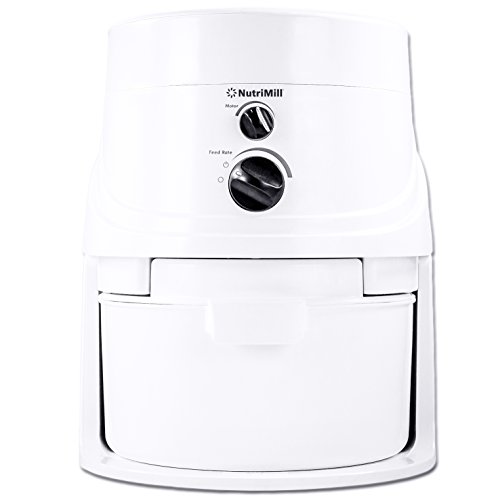
Compare the documented fit, complete setup and limitations for NutriMill Classic, NutriMill Harvest.
See the model shortlist ↓Start with the appliance you already own
Record the blender’s model, container and blade assembly. Read its own dry-ingredient instructions for permitted foods, batch limits and operating sequence. We have not verified a particular Vitamix, Ninja, food processor or coffee grinder in this guide, so no general permission is implied for those families.
If the documentation does not cover your task, ask the manufacturer before trying it. A video showing someone processing grain does not establish compatibility for your machine.
Define what counts as a useful result
The relevant question is whether the output fits your intended recipe and repeat workflow. A coarse meal and a finer flour behave differently, and a description of “powder” does not substitute for a texture comparison.
We have not tested the same grain in a matched blender and mill. Any decision about fineness, noise or processing time therefore needs either reliable equivalent testing or a small permitted trial in your own equipment. Keep that result in the milling notebook instead of treating it as a universal ranking.
The compatibility checker separates documented permissions from unknown combinations.
Check your grain →Compare the complete cost and workflow
If an appliance you own supports the exact task, include only any genuinely required extra container or part in the comparison. If it does not, a dedicated mill is a separate purchase with its own footprint and cleaning needs.
The cost calculator lets you enter your actual equipment and ingredient costs. It does not assume milling always saves money. Include grain shipping and the amount of usable flour you keep after any sifting.
When to investigate a dedicated mill
A dedicated electric grain mill is worth investigating when flour milling is a repeated task and its documented adjustment, grain permissions and collection arrangement solve a specific limitation. The best reason to buy is a clear fit with your process.
Do not purchase solely because a generic comparison promises finer flour, preserved nutrients or a quieter kitchen. Those are separate claims requiring evidence beyond the appliance category.
Questions answered
Can you mill flour in a blender?
Only if the exact blender and container instructions permit the grain and process. We do not assume permission across every model from a brand.
Does a high-powered blender replace a grain mill?
Not by category alone. Compare the exact blender and container instructions with the flour output, permitted batch and repeat workflow you need.